

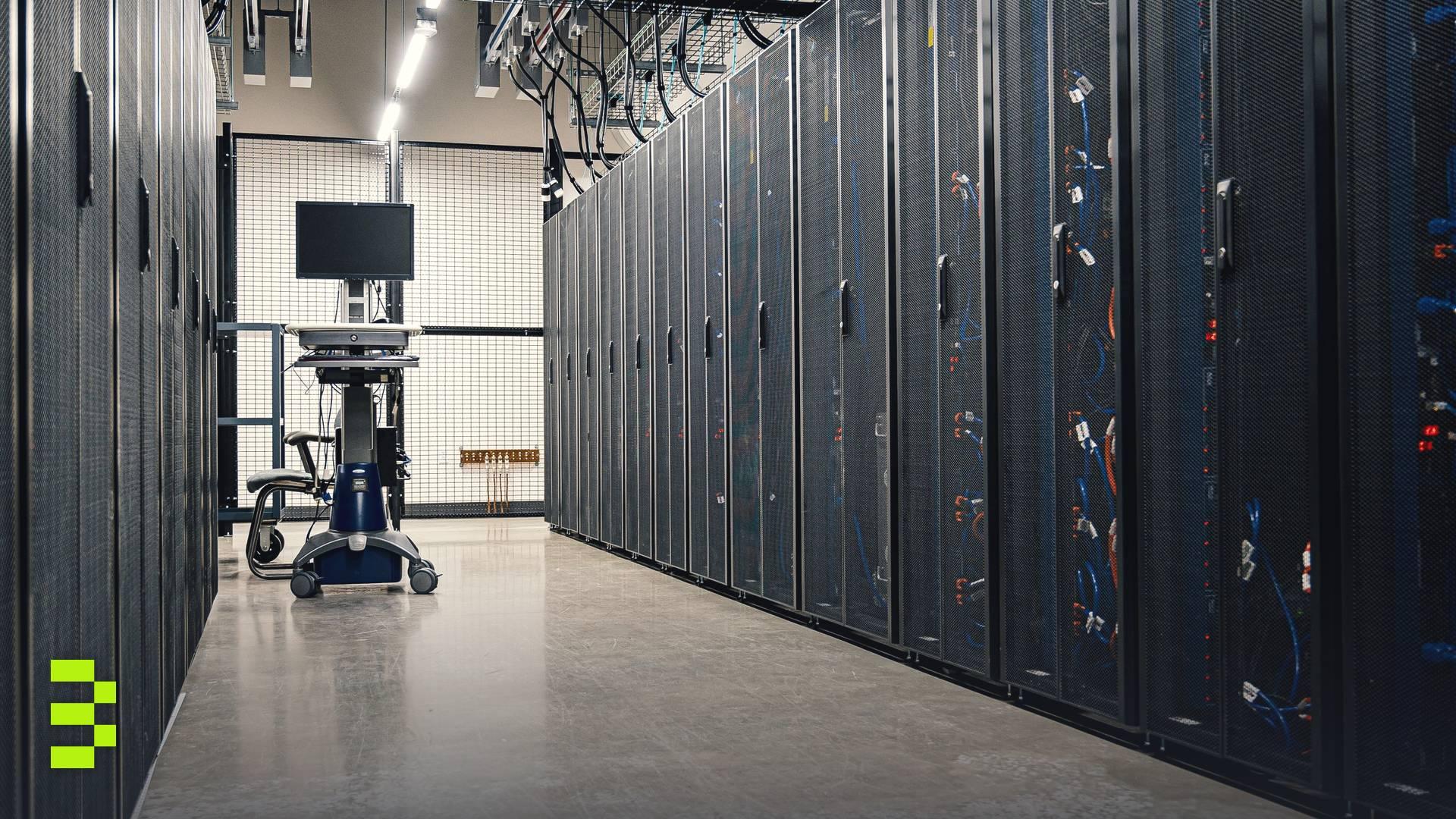
Microsoft, Alphabet and Meta spent roughly $131 billion on capital expenditures in a single quarter, and Microsoft and Alphabet earnings on Wednesday showed who can still afford it: Microsoft had money left over, Alphabet did not.
Microsoft reported revenue of $92.3 billion for its fiscal first quarter, up 19%, with Azure growing 48%. Alphabet reported revenue of $127.6 billion, up 25%, and a Google Cloud business that more than doubled. Then you get to the cash flow statements.
The short answer: AI demand is real at both companies, but the bill for data centers now eats all of Alphabet's operating cash and then some. Microsoft spent heavily too, came in under Wall Street's capex estimate, and still generated $18.6 billion in free cash flow.
What did Microsoft and Alphabet earnings show about AI capex?
Capital expenditures (capex) are what a company spends on long-lived things like buildings, chips and servers. Free cash flow is the cash from operations left after paying for them. That second number is the one that tells you whether AI is paying its own way yet.
Here is the quarter side by side, using each company's own release. Microsoft's and Meta's capex figures include finance leases and Alphabet's counts purchases of property and equipment, so treat the comparison as close, not exact.
- Microsoft: revenue $92.3 billion (up 19%), capex $45.2 billion including finance leases, free cash flow $18.6 billion (down 27%, per CNBC).
- Alphabet: revenue $127.6 billion (up 25%), capex $51.4 billion, free cash flow negative $9.1 billion, 204,757 employees versus 190,167 a year earlier.
- Meta: revenue $64.6 billion (up 26%), capex $34.9 billion, free cash flow negative $2.1 billion, 66,775 employees, down 15% (Meta release).
Add the three capex lines and you get about $131.5 billion. For scale, that is more than Microsoft's entire quarterly revenue.
How did Alphabet's cash flow turn negative?
Alphabet generated $42.3 billion from operations and spent $51.4 billion on property and equipment, according to its earnings release. That left free cash flow at negative $9.1 billion, after negative $5.9 billion the quarter before. Three quarters earlier, quarterly capex was $27.9 billion.
The spending is producing revenue. Google Cloud brought in $30.7 billion, up 103%, and its operating income rose to $11.1 billion from $3.6 billion a year earlier. Alphabet says TPU systems sales (its in-house AI chips, now sold to outside customers) were a meaningful contributor.
Chief executive Sundar Pichai wrote that the company is now at "a half-trillion-dollar annual run rate." Investors focused elsewhere. Shares fell more than 10% in extended trading, CNBC reported, after Alphabet missed on both revenue and earnings for the first time in nearly four years. Adjusted earnings came in at $2.67 a share against $3.02 expected.
Why did Microsoft stock rise after earnings?
Microsoft spent less than expected and grew faster where it counts. Capex including finance leases was $45.2 billion, up about 30% but below the $50.67 billion analysts expected, according to CNBC. About 75% of it went to short-lived assets such as servers and chips.
Azure grew 48% and, for the first time, Microsoft put a dollar figure on it: $33.17 billion for the quarter. The Microsoft Cloud total was $63.9 billion, up 30%, and commercial remaining performance obligation (contracted revenue not yet booked) rose 73% to $677 billion.
For the December quarter, Microsoft guided to Azure growth of 49% to 50% in constant currency, revenue of $96 billion to $97.1 billion and capex above $50 billion. Shares rose 4% after hours, per CNBC.
What does this mean for employees paid in stock?
If part of your pay is Alphabet or Microsoft RSUs (restricted stock units, shares that vest over time), Wednesday was a split screen. The same AI buildout is in both quarterly reports, but the market rewarded the company whose spending came in under forecast and whose cash flow stayed positive. We walked through how RSUs and lockups work in our Anthropic S-1 explainer.
Headcount is the other tell. Alphabet added about 14,600 people in a year, while Meta ended the quarter with 15% fewer employees than a year earlier. Both are spending more on machines. Cheaper models help the buyers of this compute, as the GPT-6.1 Terra price cut showed, but someone still has to build the data centers.
What did the Fed and bitcoin do?
The Federal Reserve held rates at 3.75% to 4% on a 10 to 2 vote, with Lisa Cook and Beth Hammack preferring a quarter-point hike. The statement said "Inflation remains elevated," and the hold follows September's increase, CNBC noted. Chair Kevin Warsh told reporters one 2027 meeting will be set aside for strategy only.
Bitcoin mostly ignored all of it. It traded around $81,215 at about 7:10 p.m. ET, up 0.5% over 24 hours, per CoinGecko. Crypto had its own scare this week over an AI math result and Bitcoin's keys, and earnings season didn't add another one.
Microsoft and Alphabet earnings FAQ
How much did Microsoft spend on capex this quarter?
$45.2 billion including finance leases in fiscal Q1 2027, up about 30%, and Microsoft expects more than $50 billion in the December quarter.
Why is Alphabet's free cash flow negative?
Capex of $51.4 billion was bigger than the $42.3 billion Alphabet generated from operations, leaving free cash flow at negative $9.1 billion, its second straight negative quarter.
How fast is Google Cloud growing?
Google Cloud revenue rose 103% to $30.7 billion in Q3 2026, and the unit's operating income was $11.1 billion.
How big is Azure?
Microsoft disclosed Azure revenue in dollars for the first time: $33.17 billion for the quarter, up 48%.
Microsoft CFO Amy Hood summed up the quarter's real constraint on the call, as quoted by CNBC: "We still have demand that exceeds supply." At $131 billion a quarter, the industry is working on that.